Buy gold bars from Africa online in 2026 at the lowest prices. Certified 24K, 22K & 18K gold bars, nuggets and coins from Kenya, Ghana, Tanzania, South Africa & DRC. Live prices, legal export, secure worldwide shipping. Updated May 2026.
Why Buy Gold Bars from Africa? The World’s Best Value for Gold in 2026
Africa is the source of approximately 25% of the world’s annual gold production — and it is where some of the most exceptional gold-buying opportunities exist for international investors, dealers, and institutional buyers.
With gold trading at approximately $4,720 USD per troy ounce as of May 2026 — 41% higher than a year ago and close to the all-time record of $5,602 set in January 2026 — the case for buying gold at African mine-direct prices has never been stronger.
At Buy Gold Bars Africa Limited, we connect verified international buyers directly with licensed gold exporters across the continent’s richest gold-producing nations: Kenya, Ghana, Tanzania, South Africa, Mali, and the DRC.
Mine-direct sourcing, zero middlemen, competitive pricing, assay-certified purity, and fully documented legal export are what we deliver — every transaction, every time.
Whether you are buying 1 gram or 1 kilogram, raw nuggets or refined 24K gold bars, gold dust or investment-grade bullion — this 2026 guide covers everything you need to know about buying gold bars from Africa safely, legally, and profitably.
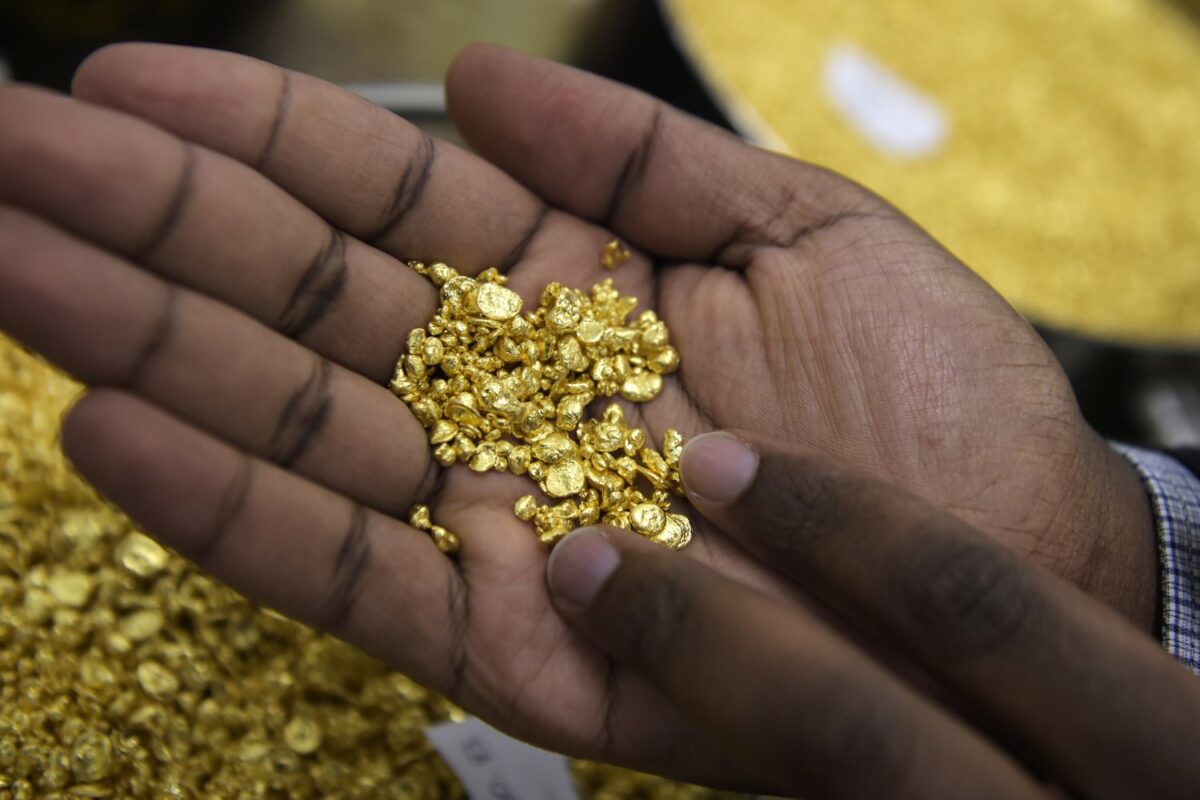
Current Gold Price in Africa — Live Rates by Country (May 2026)
Gold prices across Africa are derived from the international LBMA spot price (currently ~$4,720/oz = $151.77/gram for 24K pure gold), adjusted for local exchange rates, dealer premiums, and applicable taxes. Because most African gold is priced in or referenced to US dollars, prices are broadly similar across countries with minor variations for local premiums.
Global Spot Reference — May 8, 2026:
- Gold spot price: ~$4,720 USD per troy ounce
- 24K gold per gram: ~$151.77 USD
- 1-year gain: +41% (from ~$3,341/oz in May 2025)
- 2026 all-time high: $5,602/oz (January 28, 2026)
Gold Price per Gram in Major African Countries (USD, May 2026)
| Country | 24K Price/Gram (USD) | 22K Price/Gram (USD) | 18K Price/Gram (USD) | Notes |
|---|---|---|---|---|
| Kenya | $ 149 – $156 | $137 – $143 | $112 – $117 | Mine-direct pricing; competitive premiums . |
| Ghana | $151 – $158 | $138 – $145 | $113 – $119 | GoldBod regulated; PMMC assay |
| Tanzania | $150 – $157 | $138 – $144 | $113 – $118 | TMAA regulated; Geita-region supply |
| South Africa | $152 – $160 | $139 – $147 | $114 – $120 | LBMA-certified; Rand Refinery bars |
| Uganda | $149 – $155 | $136 – $142 | $112 – $116 | Competitive; stable KES exchange rate |
| Mali | $149 – $155 | $136 – $142 | $112 – $116 | Major producer; competitive artisanal |
| DRC | $147 – $154 | $135 – $141 | $110 – $116 | Kibali-region; verify sourcing carefully |
| Sudan | $148 – $155 | $136 – $142 | $111 – $116 | Formal channel only; see compliance note |
| Ethiopia | $125 – $135 | $115 – $124 | $94 – $101 | State-controlled; discount reflects regulations |
⚠️ Note: The old article’s prices of $58–$63/gram were from early 2025 when gold traded at ~$1,925/oz. Current May 2026 prices are approximately 2.4× higher due to the historic global gold bull market. Always request a live quote before transacting.
Gold Price per Gram by Karat — Africa (USD)
| Karat | Purity | 24K Ratio | Price/Gram (USD) |
|---|---|---|---|
| 24K | 99.9% | 1.000 | $149 – $158 |
| 22K | 91.6% | 0.916 | $136 – $145 |
| 21K | 87.5% | 0.875 | $130 – $138 |
| 18K | 75.0% | 0.750 | $112 – $119 |
| 14K | 58.5% | 0.585 | $87 – $93 |
| 10K | 41.7% | 0.417 | $62 – $66 |
Gold Bar Price Reference — Africa (USD)
| Weight | 24K Price (USD) | 22K Price (USD) |
|---|---|---|
| 1 gram | $149 – $158 | $136 – $145 |
| 5 grams | $745 – $790 | $680 – $725 |
| 10 grams | $1,490 – $1,580 | $1,360 – $1,450 |
| 50 grams | $7,450 – $7,900 | $6,800 – $7,250 |
| 100 grams | $14,900 – $15,800 | $13,600 – $14,500 |
| 250 grams | $37,250 – $39,500 | $34,000 – $36,250 |
| 500 grams | $74,500 – $79,000 | $68,000 – $72,500 |
| 1 kilogram | $149,000 – $158,000 | $136,000 – $145,000 |
Why Africa Is Still the Best Place to Buy Gold in 2026
Despite the significant price increases from 2025 to 2026, Africa retains its fundamental advantages over buying gold through European, American, or Asian retail channels:
1. Mine-Direct Pricing — No Retail Markup
Buying through licensed African exporters means accessing gold at prices close to the mine or refinery gate — eliminating the distributor, wholesaler, and retail markups that add 5–20% to prices in Western markets. Our direct supply chain from mines in Kenya, Ghana, and Tanzania consistently delivers 7–15% cost savings versus equivalent products in European or US bullion markets.
2. Africa Produces 25% of the World’s Gold
Ghana, South Africa, Mali, DRC, Tanzania, and Sudan collectively produce hundreds of tonnes of gold annually. This abundant local supply creates the foundation for competitive pricing that is simply not replicable in import-dependent markets.
3. Competitive Export Frameworks
Countries like Ghana (under Gold Bod), Kenya (under BGMA), and Tanzania (under TMAA) have developed transparent, internationally recognized gold export frameworks that protect buyers through documented chain-of-custody, certified assay, and legal export authorization.
4. Flexible Quantities for All Buyers
African suppliers offer gold from 1 gram to multi-kilogram orders, with no minimum quantity restrictions that are common at European bullion banks.
Whether you are a first-time investor buying 5 grams or a refinery purchasing 50 kilograms, Africa’s market accommodates you.
5. Diverse Product Range
From investment-grade 24K gold bars and certified bullion coins to natural gold nuggets and artisanal gold dust, Africa offers the widest range of gold product formats of any producing region — enabling buyers to match their specific investment, manufacturing, or collection needs precisely.
How to Legally Buy Gold Bars from Africa – Step-by-Step Guide
Step 1: Verify Your Export Licensing Requirements by Country
Each African country has its own gold export authority:
| Country | Regulatory Body | What to Verify |
|---|---|---|
| Ghana | Ghana Gold Board (GoldBod) | LGE (Licensed Gold Exporter) status |
| Kenya | Ministry of Energy and Mineral Development | BGMA license |
| Tanzania | Tanzania Mineral Audit Agency (TMAA) | Export permit + TMAA assay |
| South Africa | South African Diamond and Precious Metals Regulator | Dealer license |
| DRC | SMRC (Sudanese Mineral Resources Co.) | SMRC authorization (SAF-controlled areas only) |
Step 2: Conduct Due Diligence on Your Supplier
For any gold transaction above $10,000:
- Request the dealer’s current government license with validity date
- Ask for previous transaction references from verifiable international buyers
- Review assay certificates from the last 3 months
- For DRC sourcing, request OECD Conflict Minerals Due Diligence documentation
Step 3: Get a Live Priced Quote
Gold prices change every minute. Request a quote that includes:
- Current LBMA spot price reference
- Dealer premium over spot (should be 1–5% for legitimate dealers)
- Export fees, assay fees, and documentation costs
- Insurance and freight estimates
Step 4: Review and Sign a Purchase Agreement
A legally binding purchase agreement must specify:
- Gold quantity (exact grams or kilograms)
- Purity (karat and percentage)
- Price per gram/kilogram and total invoice value
- Payment terms and currency
- Delivery timeline and method
- Dispute resolution jurisdiction
Step 5: Independent Assay Verification
Before final payment, require independent assay testing from:
- A government-accredited laboratory (PMMC in Ghana, TMAA in Tanzania, SGS International)
- An XRF or fire assay test confirming stated purity
- A sealed certificate matching the gold’s serial number or batch ID
Step 6: Secure Payment
- Bank-to-bank wire transfer (SWIFT): Standard for transactions above $50,000
- Escrow service: Recommended for first-time transactions with any supplier — funds only release upon delivery confirmation
- Letter of Credit (LC): For institutional or very large transactions — provides bank-backed security for both parties
- Avoid cryptocurrency payments for gold purchases unless you have full regulatory compliance framework in place
Step 7: Export Documentation Checklist
Before your gold leaves Africa, ensure you have:
- ✅ Export license from relevant mineral authority
- ✅ PMMC/TMAA/official assay certificate
- ✅ Certificate of Origin
- ✅ Commercial Invoice
- ✅ Packing List
- ✅ Customs Declaration
- ✅ Air Waybill (AWB) or Bill of Lading
- ✅ Insurance certificate covering full declared value
Step 8: Arrange Secure International Logistics
All gold shipments from Africa should use professional, insured precious metals carriers:
- Brinks Global Services — The industry standard for high-value precious metals logistics, with operations across Africa including Accra, Nairobi, Johannesburg, and Dar es Salaam
- Malca-Amit — Premium precious metals courier with allocated vault storage and global redelivery
- G4S Secure Logistics — Strong West and East Africa coverage
- DHL Express (for smaller parcels) — For shipments under 5kg with full insurance declarations
Departure airports: Kotoka International Airport (Accra), Entebbe International Airport (Kampala), Julius Nyerere International Airport (Dar es Salaam), O.R. Tambo International Airport (Johannesburg)
Gold Bar Weights and What Each Is Best For
| Weight | Best For | Typical Buyer | Typical Liquidity |
|---|---|---|---|
| 1 gram | Gift, first investment, trial purchase | Retail investors, first-time buyers | High |
| 5–10 grams | Small investment, portfolio start | Retail and mid-level investors | High |
| 100 grams | Serious investment, storage | Experienced investors, HNWIs | High |
| 250–500 grams | Bulk investment, resale | Dealers, institutional buyers | Medium-High |
| 1 kilogram | Large investment, wholesale | Refineries, dealers, institutions | High |
| Dore bars (1–12kg) | Refinery input material | Refineries, processors | Medium |
Cheapest Country to Buy Gold in Africa (2026 Analysis)
The question of which African country offers the cheapest gold is nuanced in 2026, because prices have converged significantly as the formal market has developed. However, some advantages remain:
For Lowest Premium over Spot: Kenya and Mali offer the tightest spreads for artisanal gold, particularly for raw/dore-grade material, due to lower overhead costs and more competitive local dealer markets.
For Most Competitive Pricing on Refined 24K Bars: Ghana (via Gold Bod-licensed exporters) and Uganda (African Gold Refinery) offer investment-grade bars closest to international spot, typically at 1–3% premium.
For Most Internationally Recognized Documentation: South Africa (Rand Refinery) and Ghana (PMMC-certified, Gold Bod-authorized) provide the most globally accepted certifications — justifying a slightly higher premium for buyers who need maximum downstream acceptability.
For Discount Raw Gold: Uganda, Tanzania, and DRC (formal channels only) offer raw gold and dore at 5–15% below refined gold bar prices, reflecting the cost of further processing.
Our verdict: For institutional buyers wanting certified, LBMA-acceptable gold, Ghana or South Africa are optimal. For bulk buyers comfortable with further refining, Uganda and Tanzania offer the best mine-direct pricing in East Africa.